ASTON MARTIN SET TO HAVE MAJOR POWER UNIT STEP UP AFTER SUMMER BREAK
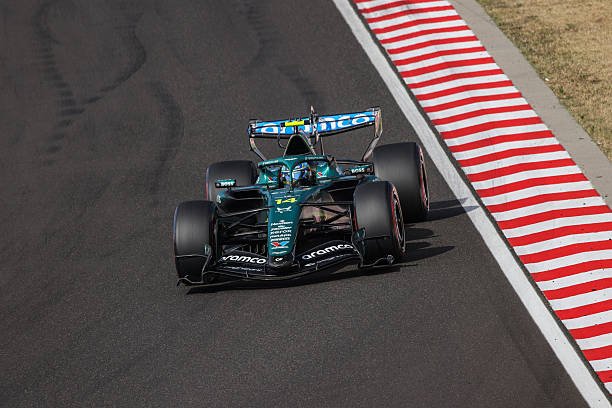
Aston Martin is continuing its development programme after the Hungarian Grand Prix, with Honda preparing a new power unit for the second half of the 2026 Formula 1 season.
The updated engine is scheduled to make its race debut at the Dutch Grand Prix at Zandvoort. Honda trackside general manager and chief engineer Shintaro Orihara confirmed in July that the manufacturer was planning to introduce the new power unit after the summer break.
The development is possible thanks to the FIA’s Additional Development and Upgrade Opportunities (ADUO) system. The rules allow power unit manufacturers that are sufficiently behind the benchmark to receive extra development opportunities, including additional cost-cap allowances and development capacity. The system is based specifically on the performance of the internal combustion engine.
Honda was assessed as being more than 4% behind the benchmark in the first ADUO measurement period. This gave the Japanese manufacturer two upgrade opportunities for 2026. Honda then decided to use them as part of one larger summer development rather than introducing two separate upgrades during the season.
The first ADUO assessment placed Red Bull Ford Powertrains as the benchmark for ICE performance. Honda’s deficit was one of the reasons the manufacturer received additional development freedom, with the FIA system specifically designed to help manufacturers close large power gaps without introducing a traditional Balance of Performance system.
The FIA has explained that ADUO does not directly give manufacturers extra fuel flow or electrical power. Instead, it provides additional resources to develop the power unit. The areas that can be worked on include combustion efficiency and other parts of the engine, while the overall performance of the power unit also depends on systems such as the battery, inverter, turbo and energy management. (FIA)
Honda’s 2026 power unit, the RA626H, is its first engine developed for the new generation of Formula 1 regulations and is supplied exclusively to Aston Martin as part of their works partnership. The 2026 rules also increased the electrical contribution of the power unit significantly, making energy deployment an important part of overall performance.
Aston Martin and Honda have also faced reliability issues during the opening part of the season. FIA documents show that both Fernando Alonso and Lance Stroll have already used several new power-unit components during the early races, including energy stores, control electronics and ancillary components.
The new specification has already completed its first track running during Pirelli’s tyre test at the Hungaroring, with Jak Crawford driving the Aston Martin. The test gives Honda and Aston Martin an opportunity to collect data before the power unit is introduced in a race weekend.
Reports indicate that Aston Martin is targeting a gain of around five tenths per lap from the overall development, while other reports have suggested a possible improvement of around 60 horsepower compared with the current specification. These figures have not been officially confirmed by Honda or Aston Martin, so the real gain will only become clear once the new engine runs in a Grand Prix weekend.
The Dutch Grand Prix will therefore be the first proper test of the new Honda specification. Aston Martin will also have to understand how the extra power affects energy deployment, reliability and the balance between straight-line performance and efficiency before the team reaches circuits such as Monza.

Share this content: