THE ROAD TO QUALIFYING: WHAT HAPPENED IN INDY500 PRACTICE WEEK
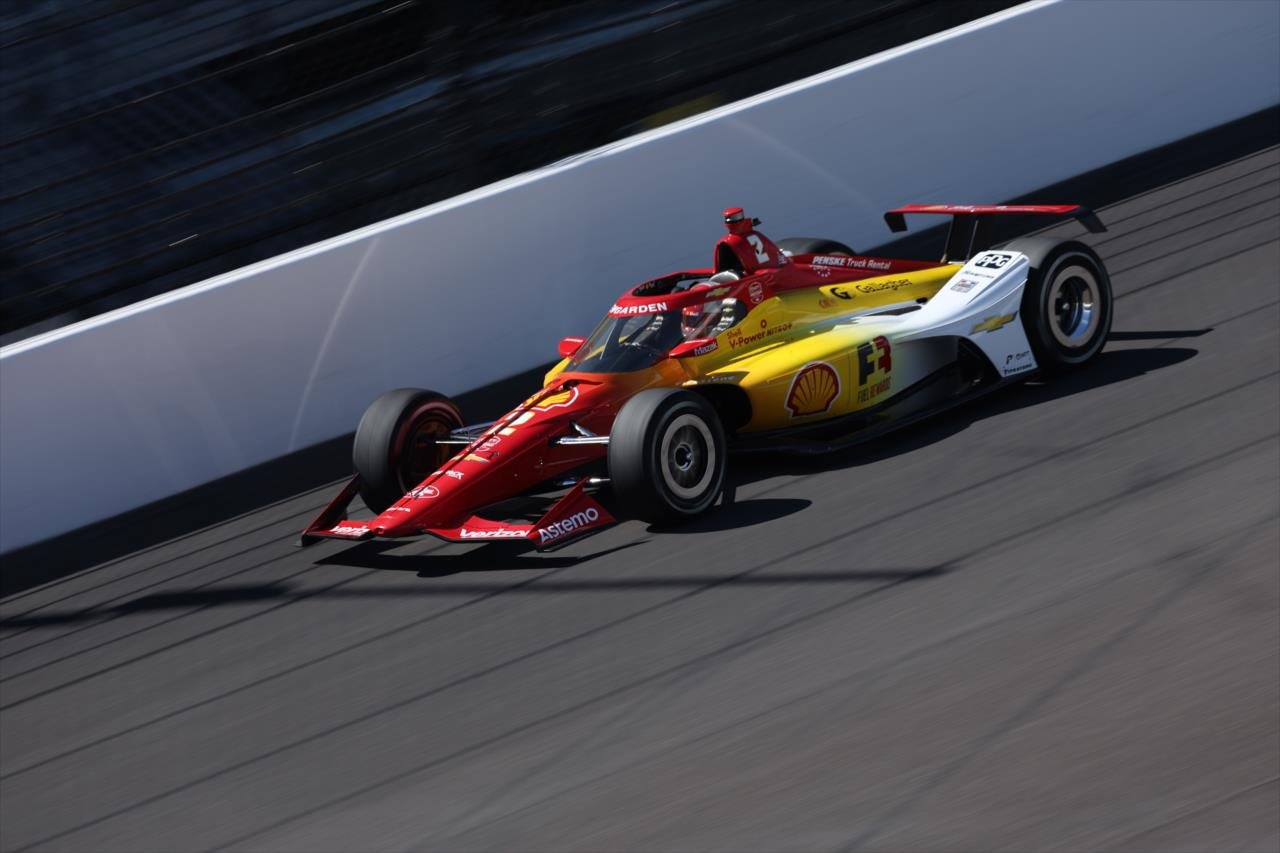
Four days of practice at the Indianapolis Motor Speedway gave the first real picture of who looks strong before qualifying for the 110th Indy500. Different teams took turns at the top, engine problems hurt several Chevrolet teams, and the battle between Honda and Chevy became tighter every day. By Fast Friday, speeds had climbed above 232mph (373.386kph) and the fight for pole position looked completely open.
The opening day on Tuesday started with Marcus Armstrong leading the early running for Meyer Shank Racing. The New Zealander used a strong tow lap to reach 225.895mph (363.543kph) and stayed fastest for most of the session. Conor Daly was close behind for Dreyer & Reinbold Racing, while David Malukas showed early speed for Team Penske.
The first day also brought problems. Ed Carpenter lost an engine on his installation lap and spent hours in the garage while his team changed the Chevrolet engine in his car. Even with the delay, Carpenter returned later in the day and completed 56 laps.
As the afternoon cooled down, defending Indy 500 winner Alex Palou suddenly jumped to the top of the charts. The Chip Ganassi Racing driver had struggled earlier after complaining about the balance of his car, but setup changes helped him feel more comfortable. Near the end of practice, he delivered a lap of 225.937mph (363.611kph) to finish fastest overall.
Kyle Kirkwood led the important no-tow speeds on Tuesday. Those laps are considered more meaningful because they show the real pace of the car without help from traffic. Will Power and Jack Harvey also looked strong in clean air.
Wednesday belonged to Conor Daly. The American driver continued his excellent form and reached 228.080mph (367.063kph) to top the second practice session. Daly said the car still had more speed left, which immediately made his small Dreyer & Reinbold Racing team one of the stories of the week.
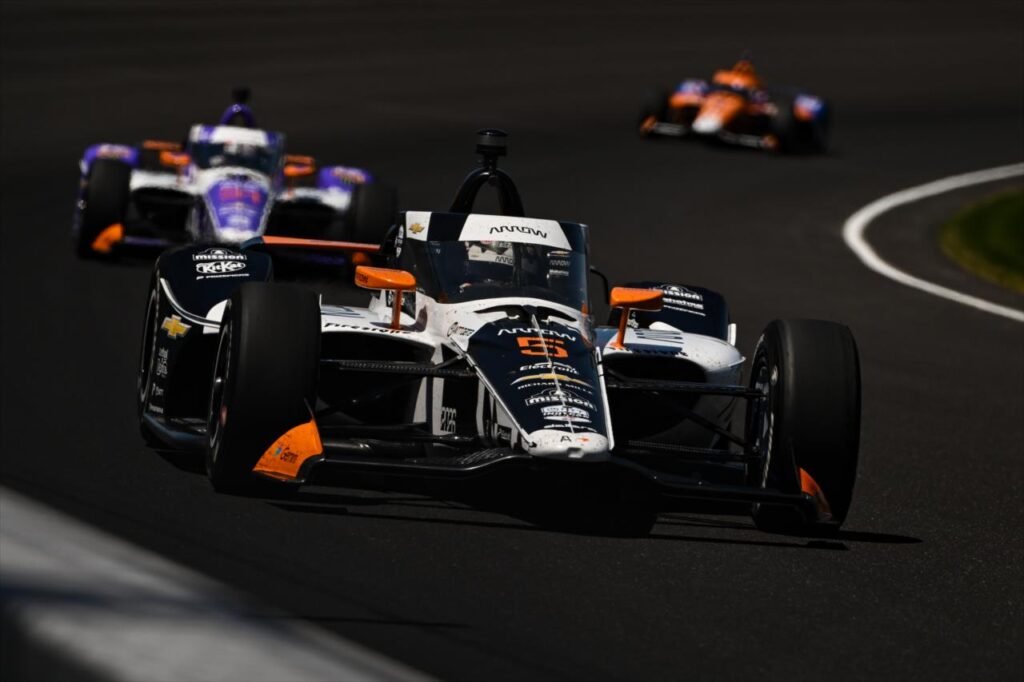
Palou stayed near the front in second, while David Malukas again impressed for Penske in third. Graham Rahal and Romain Grosjean also showed surprising pace for teams that have struggled at Indy in recent years. Scott Dixon quietly stayed near the top as well, reminding everyone why he is always dangerous at Indianapolis.
Not every top team had a good day. Arrow McLaren spent most of Wednesday far down the order. Pato O’Ward ended only 27th, while the whole team focused mostly on race traffic and setup work instead of headline speeds.
Chevrolet engine problems continued during the second day. Alexander Rossi became another Chevy driver forced into an engine change after mechanical trouble cut his session short.
Thursday brought a big recovery from Arrow McLaren. Pato O’Ward suddenly found the speed that had been missing and led practice with a lap of 227.308mph (365.819kph). The Mexican driver looked comfortable both in traffic and on qualifying-style runs, giving the team confidence before Fast Friday.
Meyer Shank Racing had a huge day as well. Helio Castroneves, Marcus Armstrong, and Felix Rosenqvist all finished near the top of the speed charts. Alexander Rossi placed fifth for Ed Carpenter Racing, while Sting Ray Robb continued a surprisingly strong week for Juncos Hollinger Racing.
Attention also started shifting toward qualifying simulations. Takuma Sato led the no-tow speeds with a lap above 223mph (358.883kph), ahead of Scott McLaughlin and David Malukas. Teams began using the final hour of practice to test the higher speeds and different balance conditions they would face in qualifying.
Alex Palou again spent time working on qualifying runs late in the day. Helio Castroneves explained that teams wanted to make sure their cars stayed stable across four laps before the pressure of qualifying arrived.
Friday’s Fast Friday session completely changed the atmosphere. Heavy rain delayed practice and shortened the running, but once the track dried, teams immediately focused on full qualifying simulations with higher turbo boost levels.
Scott McLaughlin delivered the biggest statement of the week. The Team Penske driver posted a no-tow lap of 232.624mph (374.372kph), showing massive confidence by going straight into his qualifying runs on fresh tires while many others stayed cautious. Penske teammates David Malukas and Josef Newgarden followed the same aggressive plan.
Defending winner Alex Palou remained close behind, proving Ganassi would again be a serious threat for pole. Takuma Sato, Rinus VeeKay, Alexander Rossi, Christian Rasmussen, and Felix Rosenqvist also produced strong no-tow speeds above 232mph (373.386kph).
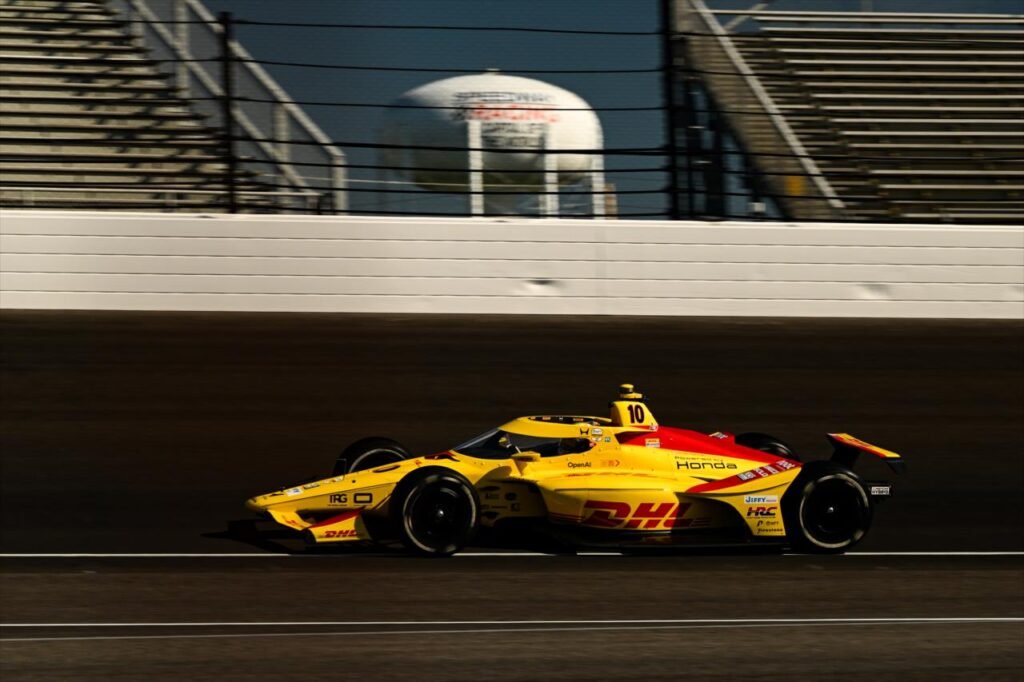
Rosenqvist actually recorded the fastest lap seen all week at 233.372mph (375.576kph), but the lap came with the help of a tow and did not count as a true qualifying simulation. Rossi also received an unwanted tow during one of his fastest runs.
More engine trouble hit Chevrolet teams on Friday when Santino Ferrucci suffered a motor failure late in the session. Even so, he still managed to place inside the top 10 in no-tow speed, keeping AJ Foyt Racing hopeful for qualifying.
One of the biggest surprises before qualifying was Andretti Global’s lack of speed. Kyle Kirkwood and the rest of the team struggled badly in no-tow conditions, leaving serious questions about whether they could challenge for the pole.
After four intense practice days, the picture before qualifying became clear. Team Penske looked extremely strong over one lap, Alex Palou and Ganassi remained consistent and dangerous, Conor Daly emerged as a surprise contender, and several smaller teams showed unexpected pace. At the same time, repeated Chevrolet engine failures and changing weather conditions added uncertainty heading into one of the most important qualifying days of the year.

Share this content: